Our history
Karbonaatjieskraal: the first farm into the Karoo
Long before it was Karoo One, this farm at the mouth of the Hex River Valley was Karbonaatjieskraal, an outspan where wagon drivers, diamond seekers, rebels and climbers stopped before heading into the Karoo. Its oldest buildings date to 1756, and their thick clay walls still keep the rooms cool.
Chapters of a Karoo farm
from outspan to hotel village
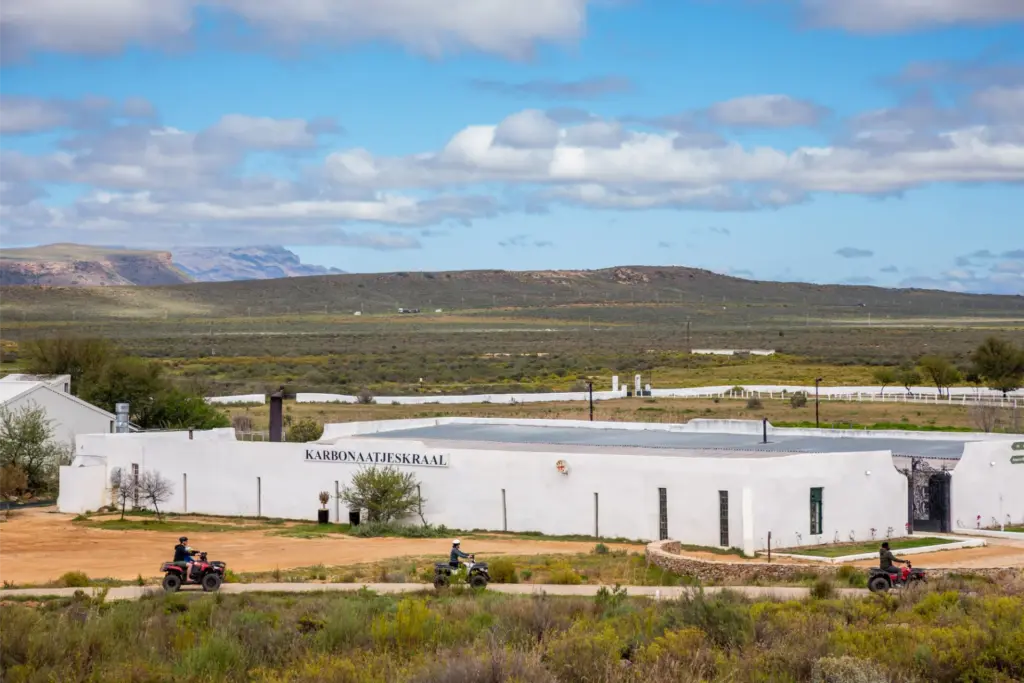
The name
A name with two stories
Karbonaatjieskraal was a resting place for travellers long before it was Karoo One. The best-known story says the name comes from the karbonaatjie: a generous portion of wholesome padkos, wrapped in a damp cloth or newspaper, that travellers could braai on the road north. For anyone heading up the Hex River Pass, it was a treasured comfort.
Another story points to the bubbling, carbonated springs that once rose near the outspan. Old records spell the name Karbonaatjieskraal, Karbonaadjieskraal or Karbonaatjies Kraal, but they all describe the same place. Coming from De Doorns, it was the first farm in the Karoo, and that is where the name Karoo 1 comes from.
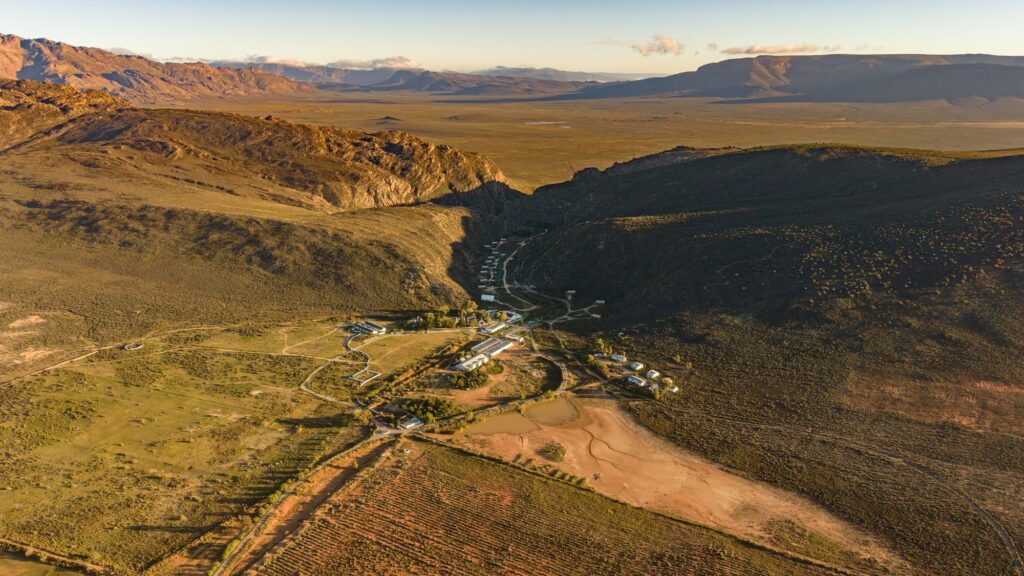
The land
2,000 hectares on the rim of a kloof
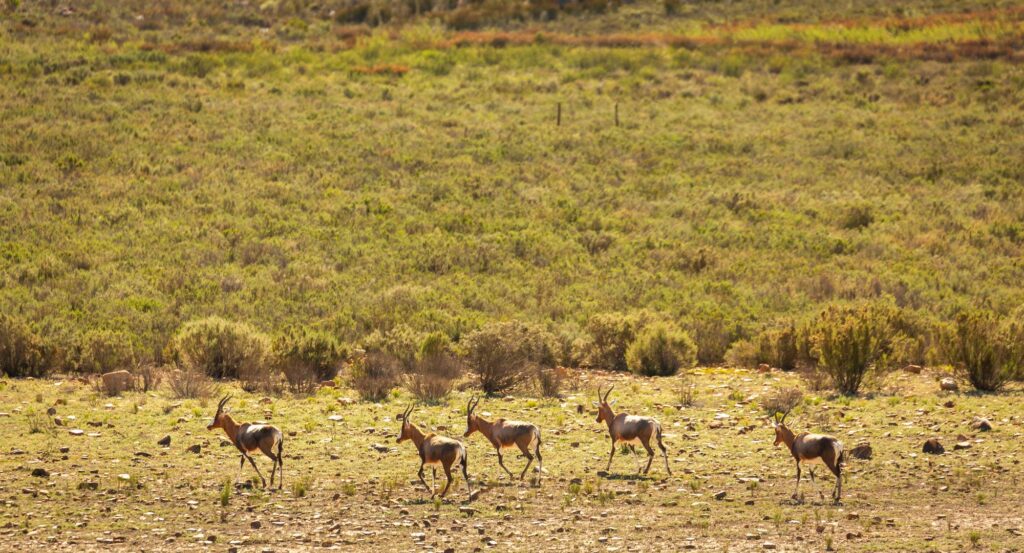
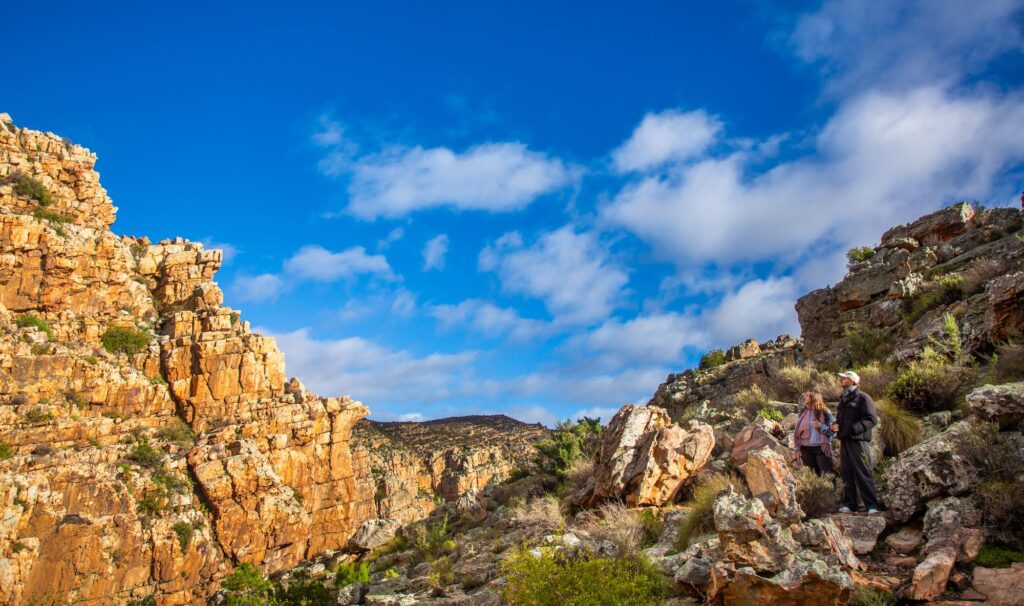
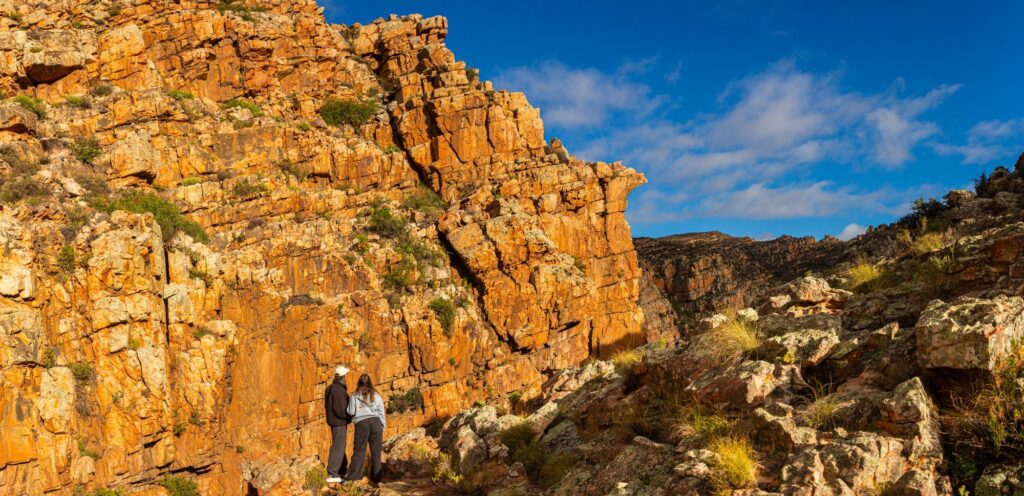
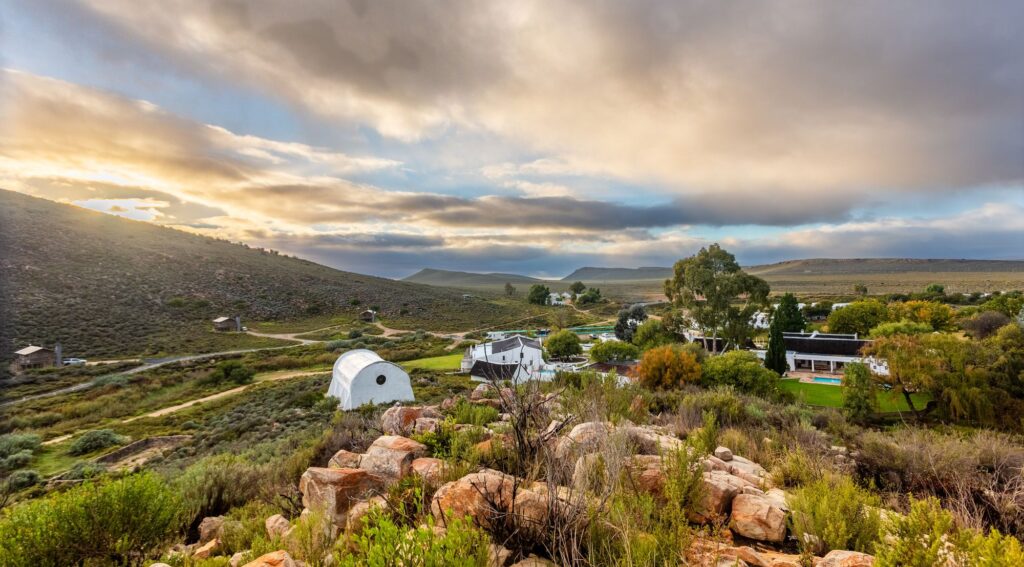
The farm covers about 2,000 hectares on the rim of a kloof that cuts a deep groove into the mountains above the Hex River Valley. Fynbos and indigenous Karoo plants cover the land, and on the horizon stands the Matroosberg, one of the highest peaks in the Western Cape and often capped with snow in winter.
Each generation that has lived here has added its own flavour to the farm, but the view from the old walls has hardly changed.
1664 to 1745
The Huguenot thread
The story of the farm is bound up with the Hugo family. Daniel Hugot was born in May 1664 in Châlons-sur-Marne, in the Champagne region of France, the son of Jacques Hugot and Jeanne Barbier. By 1688 he was living at the Cape as a Huguenot refugee.
A blacksmith by trade, Daniel was given about 51.4 hectares in Simondium, where he worked his forge, started farming and named the farm Sion. Around the turn of 1705 he married Anne Rousseau, and the couple lived on L’Arc d’Orléans, close to Sion. Daniel died in 1725, and over the generations the name Hugot became Hugo.
Their son Jacques, born at Sion in 1708, farmed at Concordia in the Koo and in the Breede Valley, in today’s Worcester district. He married Rachel de Villiers and died in 1745 at Breede Rivier, where he is buried. By then marriages were tying the family to the Rousseau and Retief families of De Doorns, in the Hex River Valley.
1750s to 1840
Grazing rights and a poison plant
In the 1700s, land on the frontier was often held as grazing rights rather than owned outright. Pierre Hugo received grazing rights for Buffelskraal at De Doorns at almost the same time as his brother Jacques received rights in the Koo, so Karbonaatjieskraal was no stranger to the family.
After Pierre died in 1752, the rights passed out of the family to Floris Smit for a time, then back to the Retief family through Tieleman Roos, who had married the youngest Retief sister. They swung between Roos and Jacobus Hugo of Buffelskraal until Jacobus died in 1769. In 1771 Wouter de Vos married his widow, Catharina Magdalena Hoppe, and took over the rights. His son, Petrus Jacobus de Vos, later inherited Karbonaatjieskraal and sold it to Gabriel François Hugo in 1840.
Why did the early Hugos farm in the Koo instead? The Hex River was known for a poison plant, locally called pisgoed, that killed oxen but did not harm dry cows. Karbonaatjieskraal was evidently plagued by it. Wouter de Vos, wisely, kept a large herd of dry cows.
1803 to 1811
Visitors, a diary and a lost spring
In 1803 Commissioner-General Jacob de Mist toured the colony and spent a night with field cornet Petrus François Hugo at De Liefde, in the Land van Waveren. Reports say his party was received with love and warmth. On the way back to Cape Town in March 1804 they stayed at Wouter de Vos’s farm, Buffelskraal, in De Doorns.
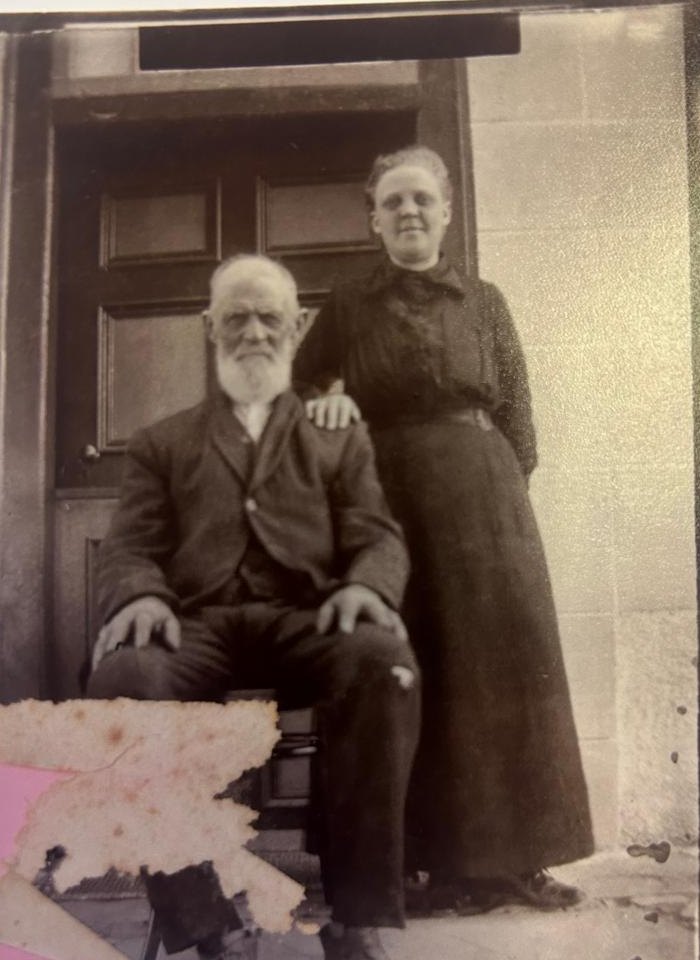
On 28 September 1805 the livestock commission stopped at P F Hugo’s farm for fresh oxen and described it as very good land for crops and wine. Petrus François Hugo (1768 to 1824) and his wife, M J Theron, raised 12 children there, and he was seen as an important local man.
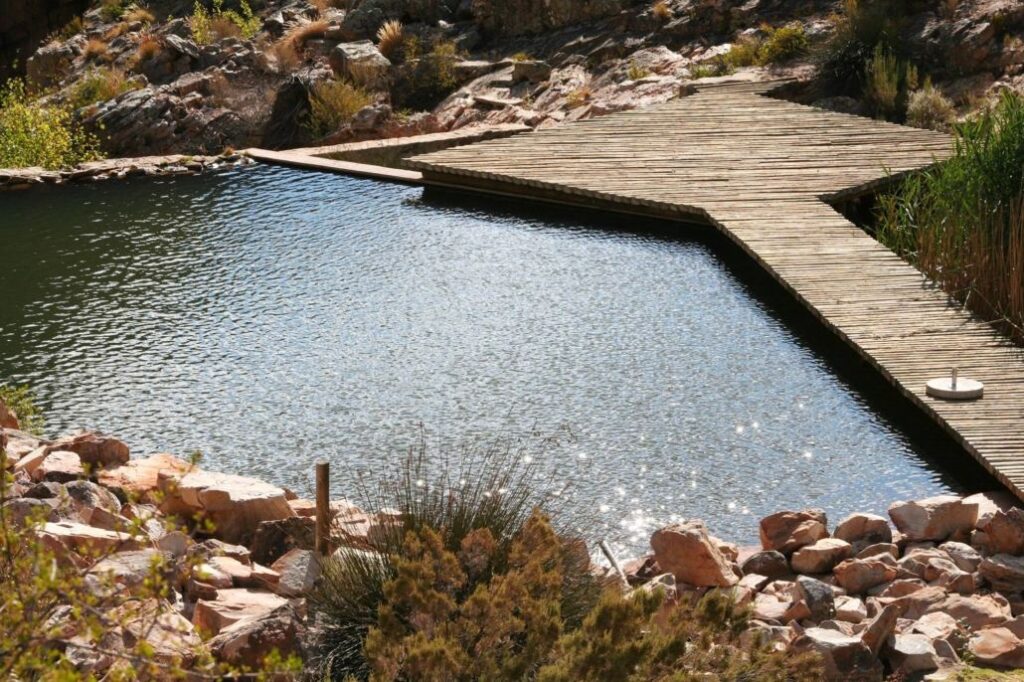
Magriet Theron kept a journal of anything worth noting. Between 1809 and 1811 she recorded earthquakes on the same fault that would cause the great Tulbagh and Ceres earthquake of 1969. After one of them the Goudini spa sprang to life. After the last, a spring at Karbonaatjieskraal disappeared.
1840
The Hugo family settles
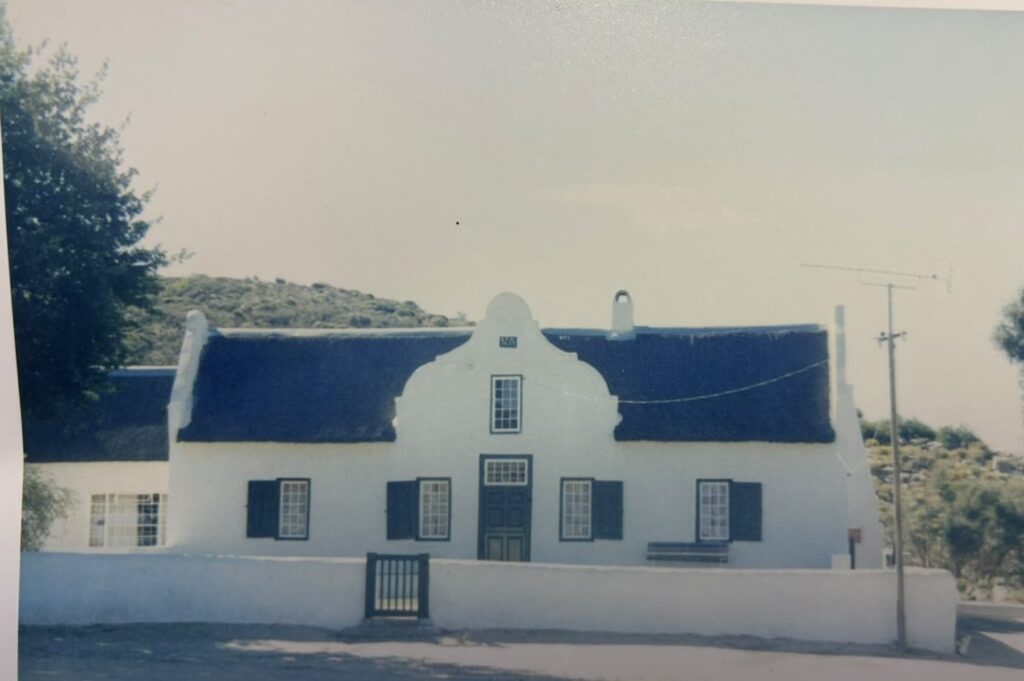
In 1840 Gabriel François Hugo and Martha Johanna Conradie took over Karbonaatjieskraal, arriving by ox wagon from Buffelskraal in De Doorns with three daughters already in the family. They are remembered as the founders of the Hexrivierberg, or Karbonaatjieskraal, branch of the Hugos. Remnants of foundations thought to be their first dwelling can still be found on the farm.
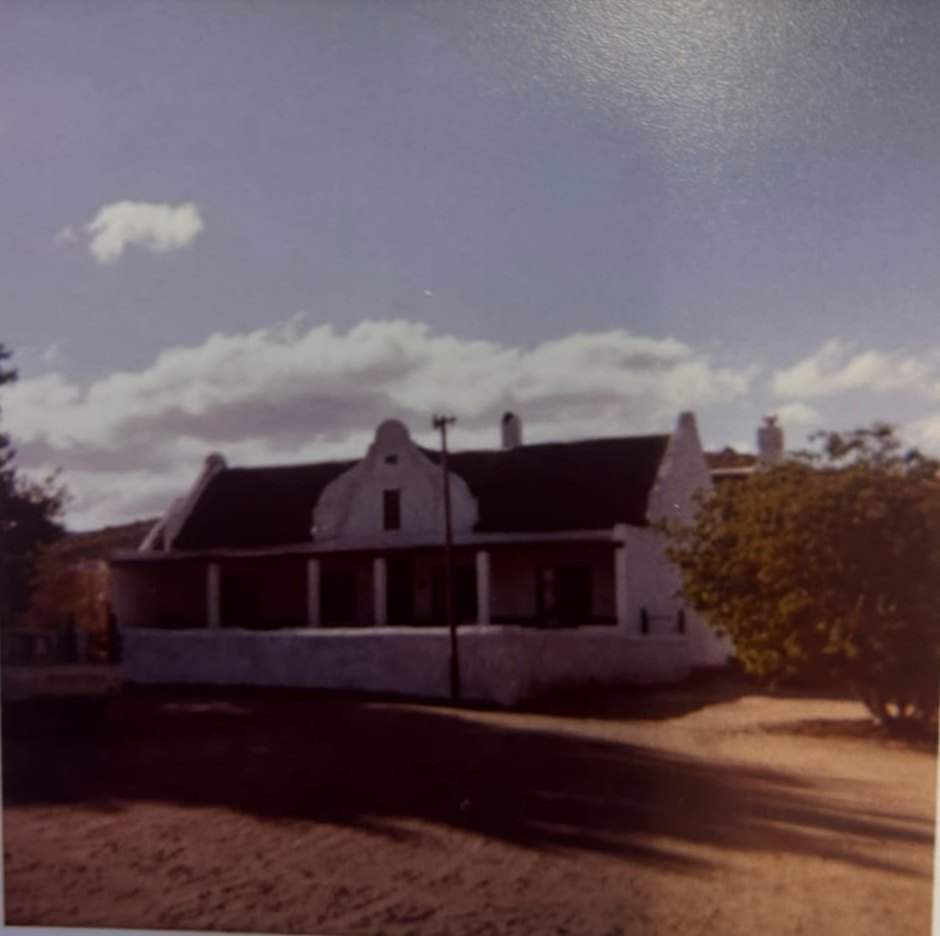
The big house followed: clay-brick walls 45.72 cm thick, square beams planed from poplars grown on the farm, and a thatched roof. The gable still carries the inscription G.F.H. 1873. The oldest buildings on the farm go back even further, to 1756.
Their three surviving sons, François Daniel, Pieter François and Gabriel François, became the founders of the three Hexrivierberg branches of the Hugo family tree.
The 1860s
The diamond road
When diamonds were found near Kimberley in the late 1860s, fortune seekers set out on the long journey north. Karbonaatjieskraal was already known for its hospitality and good food, and it became a welcome stopover before the Hex River Pass and the dry interior.
Travellers rested here while their oxen grazed, and left with karbonaatjies wrapped for the road. The parcels became part of the farm’s name and its story of hospitality, a tradition the Hugo family started in the 1860s.
1899 to 1902
Lookout posts on the ridges
During the South African War of 1899 to 1902, the British built blockhouses and fortified posts to guard key military points, and later used them with barbed wire to limit the movement of Boer commandos. More than 8,000 formal blockhouses went up in two years. Most were demolished, but some remain.
Local historian Dr Dean Allen has recorded many lookout posts around the farm. Local legend has it that General Jan Smuts and his commando escaped the British through a pass in the Witteberg in early 1902, and a series of hastily built forts went up to limit his movements. Built from local rock, posts like the one just north of the Hex River Valley are silent witnesses to a bitter conflict fought more than a century ago.
September 1901
Piet Rebel rides out
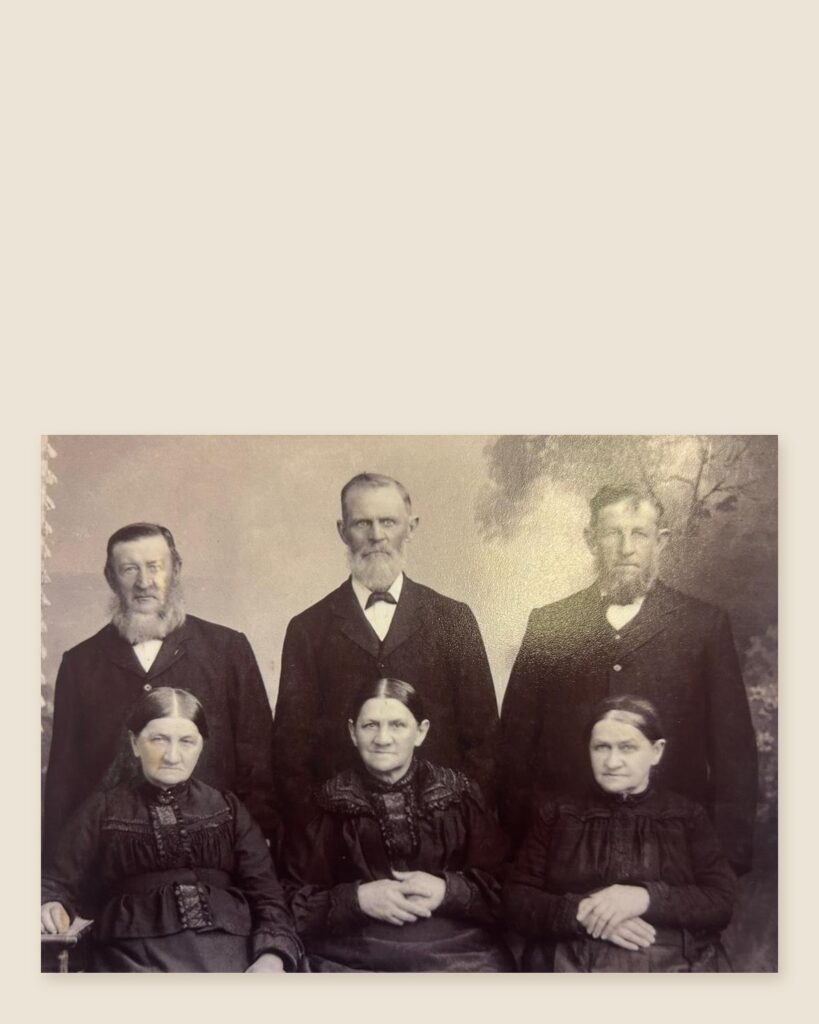
Pieter François Jacobus Hugo (1873 to 1959), remembered as Piet Rebel, lived with his parents at Karbonaatjieskraal during the war. When rumours spread that a Boer commando was forming, forty men from the Worcester Town Guard arrived at the farm and ordered him to stand or be shot, though he knew them by their first names. From then on two armed men went everywhere with him, and he had to walk to De Doorns for sugar and coffee because the draught animals had been commandeered.
Piet set three conditions for joining: the commando must come to the farm, a well-known man must ride with it, and he must be able to say goodbye to his parents. All three were met. At 01:00 on Monday 23 September 1901, Commandant Jan Theron, a nephew of the famous scout Danie Theron, arrived with eighty men, joined by Wouter (Wollie) de Vos of the neighbouring farm Stinkfontein with twenty more. Piet left with about R10, an old pair of trousers, a jacket, a blanket and a small Bible. Joining made him a Cape rebel, a name he carried with pride.
The British had blocked the road with a cannon, so Piet led the commando down a steep horse path from the neighbouring farm Kaaimansgat into the Bokveld. The British later blew the path apart with dynamite, and Piet and his father repaired it after the war. The commando rode on through Ceres and Calvinia, took towns as far as Clanwilliam, Piketberg, Darling and Malmesbury, and grew to about two hundred men before splitting into two commandos under Theron and De Vos.
1902
The long road home
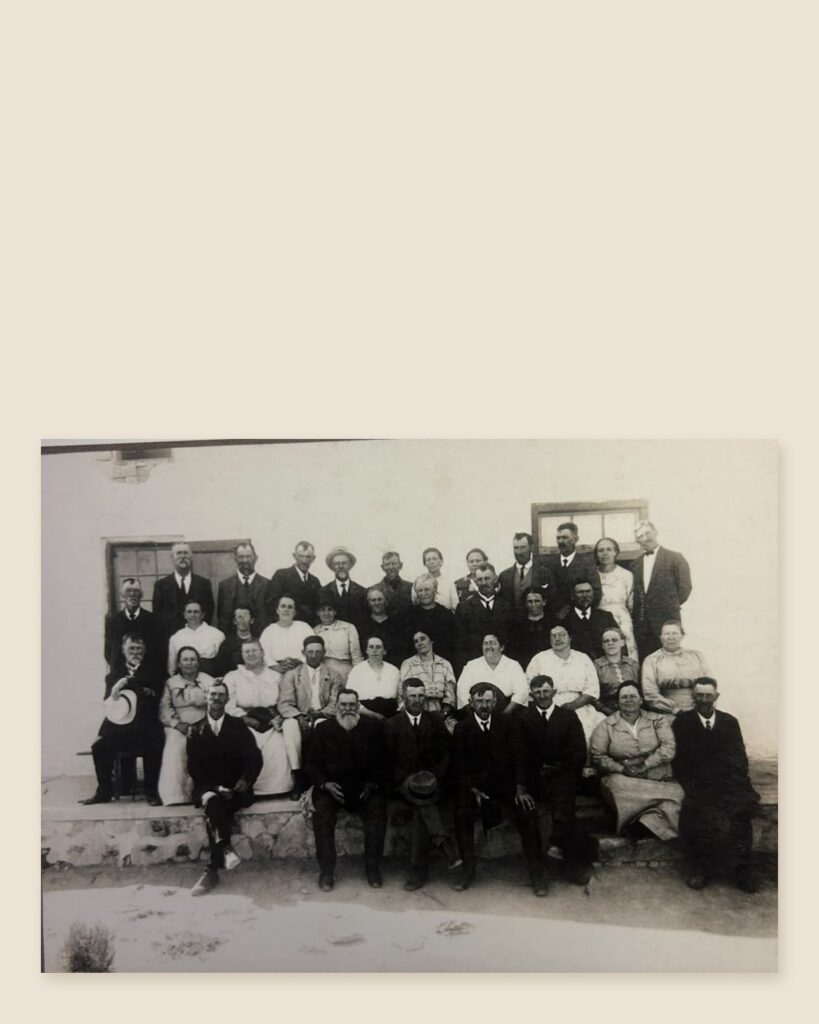
The war went hard for the commandos. Dr T W Wessels and two other prisoners escaped from a train at Matroosberg station and joined them, but on 25 February 1902 Wessels was among four men killed in a long battle at Windhoek, near Clanwilliam. The commandos had been betrayed by a man named Colyn, who was later captured and executed. Piet’s saddest memory was the death of his friend Wollie de Vos, killed in Calvinia. Piet made sure he was buried and that his family at Stinkfontein was told.
After the peace talks, the rebels met General Smuts on the farm Soetwater in the Calvinia district, where he told them that peace had been made. General Manie Maritz refused to surrender and rode off that night with twenty men, and the place was renamed Bitterwater. The rest handed in their weapons and were held in a barbed-wire camp at Clanwilliam.
Piet’s sentence was to lose his right to vote for three years. He was sent home by rail from Porterville and, with a horse and saddle from a Transvaal comrade, made it back to his parents. He returned a poor man, with livestock worth about R1,600 confiscated, but he rebuilt the farm and was buried there in 1959.
Family stories
A widow, a field cornet and a famous wine
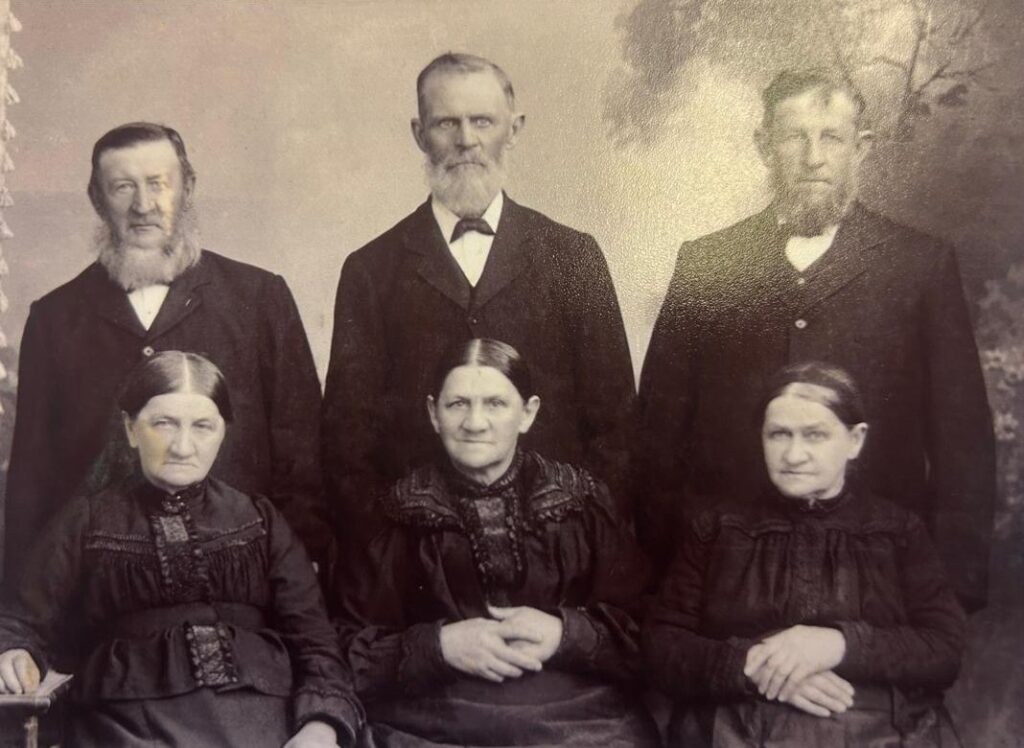
Martha Johanna Hugo, the third daughter of Gabriel François and Martha Johanna, married Hendrik Schalk Gerber of the farm Jan de Boer. Known as a capable, dynamic and devout woman, she was already widowed when British troops took livestock and jailed men across the district. She told the commanding officer that if they gave her any trouble she would pray for their punishment, and legend has it they left her alone.
The family history also keeps a story told by Dr Louis Leipoldt in his book SA Pronkwyne. His uncles gave wine made by Koos Mosterdpotjie of Wilgevlei to Crown Prince Frederick of Prussia and to Bismarck, who liked it so much that they ordered more. A Cape Town connoisseur, Dr Hahn, later won a bronze medal for the wine at an international show in Paris, possibly the first international award for a South African wine. Koos was also a field cornet, and one of his duties was paying the workers building Bainskloof Pass.
The 1900s
Mills, magnates and climbers
Family stories tell of a horse mill on the farm, where two blindfolded horses walked in circles to grind wheat between granite stones. It was later improved with cogwheels and one of the first uses of electricity in the valley, and in 1976 the family gave it to the Worcester Agricultural Museum.
Later in the 20th century the farm passed to John Rudd, grandson of De Beers co-founder Charles Rudd. He restored the farmhouse and became famous among climbers for the basket on a pulley at The Fort, which sent drinks and snacks up the rock face. From the 1990s the cliffs above the farm became one of the Western Cape’s best-known traditional climbing crags.
2009
The village reimagined
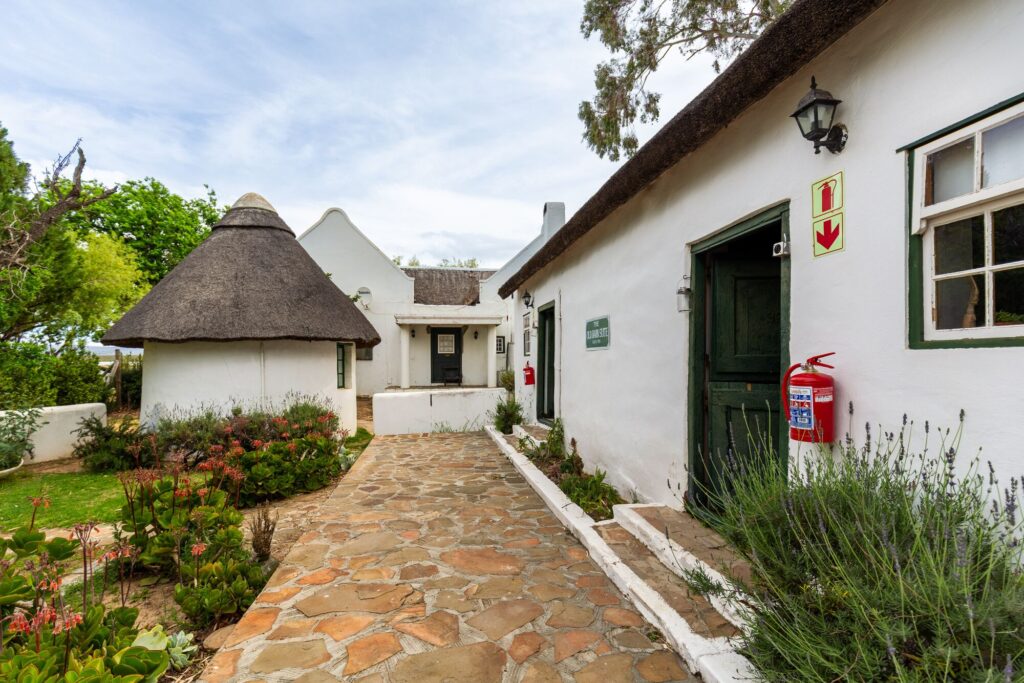
The farm grew from travellers’ inn to hotel village. In 2009 Belgian architect Willy Woestyn opened Karoo 1 Hotel Village, a new idea for the farm. It had always been his dream to create his own village, where he could share the simple things in life: good food, good wine and good company.
He kept the historic walls and restored the original buildings around the old Hugo homestead as guest rooms, so the past was layered on rather than erased. That is why the Old Barn still sits inside 18th century walls, under the same kind of poplar beams the Hugo family built with.
Karoo One is about people: the families who have lived here, the long-time staff who still work on the farm, and the guests who bring the village to life. The Woestyn family from Belgium carries on the tradition of family hospitality, and the care for this historic South African site, that the Hugo family began.
Today
A living story
Farm, inn, outspan, battlefield, climbing crag, hotel village and now glamping retreat: the farm has changed many times, but it is still the first place travellers stop before the Karoo. Today guests stay in the hotel rooms and AfriCamps tents, swim in the rock pool and walk the same ridges the commandos rode.
Like the wagon drivers before them, they find what the old name promised: good food, shelter and the feeling of arriving somewhere that remembers.
Key dates: 1664 to 1873
- 1664: Daniel Hugot is born in Châlons-sur-Marne, Champagne, France.
- 1688: Daniel arrives at the Cape as a Huguenot refugee.
- 1705: Daniel marries Anne Rousseau. They farm at Sion and L’Arc d’Orléans.
- 1708: their son Jacques is born at Sion.
- 1727: Hugo brothers are farming in the Hex River Valley.
- 1756: the oldest buildings on the farm date from this year.
- 1771: Wouter de Vos takes over the grazing rights to Karbonaatjieskraal.
- 1803: Commissioner-General de Mist stays with field cornet P F Hugo.
- 1809 to 1811: Magriet Theron records earthquakes, and a spring on the farm disappears.
- 1840: Gabriel François Hugo buys Karbonaatjieskraal from Petrus Jacobus de Vos.
- 1860s: travellers to the Kimberley diamond fields stop here for karbonaatjies.
- 1873: the date on the homestead gable, G.F.H. 1873.
Key dates: 1899 to today
- 1899 to 1902: the British build more than 8,000 blockhouses during the South African War.
- 23 September 1901: Piet Rebel Hugo joins Commandant Jan Theron’s commando on the farm.
- 25 February 1902: Dr T W Wessels is killed in battle near Clanwilliam.
- 1902: peace is declared and Piet returns home.
- 1959: Piet Rebel is buried on the family farm.
- 1976: the family horse mill goes to the Worcester Agricultural Museum.
- 1990s: the cliffs above the farm become a well-known climbing crag.
- 2009: Willy Woestyn opens Karoo 1 Hotel Village.
- Today: hotel rooms, AfriCamps glamping tents and the same open Karoo.
Image credits
Family and farm photographs are courtesy of Karoo One. The blockhouse photograph is used under the licence shown.
- A stone blockhouse from 1901 near Wolseley in the Western Cape: A3alb, CC BY-SA 3.0, Wikimedia Commons.
Stay in the story
Sleep inside walls that have welcomed travellers for more than two centuries. Rooms and AfriCamps tents are booked online.